
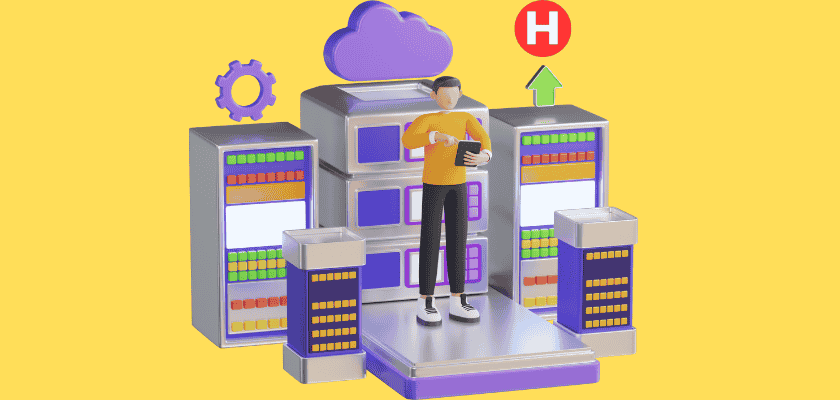
The rapid growth of the digital world is changing how we store and process data
For a long time, we relied on giant, centralized cloud data centers. These servers were far away from where people actually used their devices. While this worked for simple tasks, it is not fast enough for the modern world. Today, we need data to move instantly. As a response to this, the industry is shifting toward decentralized infrastructure. This change is the foundation for our definitive top 10 5G edge hosting 2026 guide.
At HostingClerk, we understand that centralized servers simply cannot handle the speed of today’s real-time processing needs. When you move compute power physically closer to the data source, such as IoT devices or mobile users, you create a much faster experience. This concept is called edge computing. By bringing the processing to the edge of the 5G network, we can minimize Round Trip Time, or RTT, to sub-10ms levels. This creates a near-instant connection that powers everything from smart cities to instant gaming.
1. The technical prerequisites: achieving the best low latency edge
To make modern technology work, we must tackle the hurdle of latency. Latency is the time it takes for data to travel from your device to a server and back. High-stakes applications require near-instant feedback loops that older cloud models cannot support. For example, autonomous vehicles need to process road telemetry in a split second to avoid accidents. Industrial IoT systems need to track machines in real time, and immersive AR and VR experiences rely on instant visual updates to feel real. Standard cloud architectures, which involve data traveling across many miles, are too slow for these demands.
To fix this, we look at Multi-access Edge Computing, or MEC. This is the technology that puts cloud power right where the cellular network meets the end-user. By reducing the physical hops between your device and the compute node, we achieve the best low latency edge. When the distance is shorter, the speed is higher. Think of it like moving a warehouse from the next state over to right across the street. The time it takes to get your delivery of data drops from seconds to milliseconds. This efficiency is the core goal of all 5G infrastructure planning.
2. The top 10 5G edge hosting providers
Selecting a provider requires looking at their partnerships, their physical reach, and how they handle high-speed data. The following table breaks down the leading options for your next project.

GET DEAL - Godaddy $0.01 .COM domain + Airo
GET DEAL - Godaddy WordPress hosting - 4 month free
GET DEAL - Dynadot free domain with every website
GET DEAL - Hostinger: Up to 75% off WordPress Hosting
GET DEAL - Hostinger: Up to 67% off VPS hosting
| Provider | Key 5G Partner | Primary Use Case | Latency Profile |
| AWS Wavelength | Verizon | Video streaming and gaming | Ultra-low (sub-10ms) |
| Google Distributed Cloud Edge | Multiple Telcos | Industrial automation | Low (10-20ms) |
| Microsoft Azure Edge Zones | AT&T | Private enterprise networks | Ultra-low (sub-10ms) |
| Equinix Fabric | Global carriers | Interconnection/Data hub | Low (variable) |
| IBM Cloud Satellite | Local carriers | Hybrid cloud workflows | Medium-Low |
| Lumen Technologies | Tier-1 carriers | High-speed transport | Low (fiber-optimized) |
| Vapor IO | Cell tower networks | Hyper-local computing | Ultra-low (sub-5ms) |
| StackPath | Independent | Fast web workloads | Low (distributed) |
| Cloudflare Workers | Global ISP networks | Serverless functions | Low (global edge) |
| Fastly | Network providers | Dynamic content delivery | Low (high-concurrency) |
2.1 AWS Wavelength
AWS Wavelength brings compute and storage services right into Verizon 5G networks. By placing infrastructure at the edge, developers can build apps that require ultra-low latency. It removes the need for data to travel to a regional data center.
2.2 Google Distributed Cloud Edge
Google offers a hardware-software stack that is perfect for on-premises or carrier-edge use. It allows companies to run local processing without sacrificing the tools they enjoy in the main Google Cloud. It is highly flexible for industrial IoT needs.
2.3 Microsoft Azure Edge Zones
Microsoft leverages 5G network slicing. This is a way to divide one physical network into smaller, logical parts for specific tasks. It provides dedicated, private connectivity that ensures your mission-critical data gets the bandwidth it needs without interference.
2.4 Equinix Fabric
Equinix acts as the bridge. They specialize in software-defined interconnection. They link edge nodes directly to the backbones of major 5G carriers. This ensures that even if you use different cloud providers, your data travels along the fastest routes available.
2.5 IBM Cloud Satellite
IBM Cloud Satellite is about consistency. It allows you to run your cloud services anywhere. Whether it is a 5G-enabled local data center or a factory floor, IBM keeps your software environment uniform. This simplifies the management of complex, distributed apps.
2.6 Lumen Technologies
Lumen owns a massive fiber-optic network. This physical backbone is essential for 5G edge delivery. By controlling the transport layer, Lumen ensures that data moves at light speed before it ever reaches the compute node.
GET DEAL - Godaddy $0.01 .COM domain + Airo
GET DEAL - Godaddy WordPress hosting - 4 month free
GET DEAL - Dynadot free domain with every website
GET DEAL - Hostinger: Up to 75% off WordPress Hosting
GET DEAL - Hostinger: Up to 67% off VPS hosting
2.7 Vapor IO
Vapor IO takes a unique approach called the Kinetic Edge. They place tiny, modular data centers at the base of cell towers. Because these are physically located exactly where the 5G signal originates, the latency is almost zero. It is perfect for hyper-local, high-speed tasks.
2.8 StackPath
StackPath is built for developers who want to move fast. They offer an API-centric model that makes deploying edge compute simple. Their performance is optimized for small, fast tasks that need to execute immediately upon user request.
2.9 Cloudflare Workers
Cloudflare uses a serverless model. Instead of managing servers, your code runs at every edge node in their massive network. This eliminates cold start times, which are the delays caused when a function has to wake up. In 5G environments, this speed is a massive advantage.
2.10 Fastly
Fastly’s Compute@Edge is famous for speed. It is designed to handle high-concurrency requests—meaning millions of users hitting your app at once. By processing logic near the user, it keeps the experience smooth even during traffic spikes.
3. Analyzing 5G hosting reviews and benchmarks
When looking for the right service, you should study 5G hosting reviews. These reviews help you see how providers perform in the real world, not just on a spec sheet. At HostingClerk, we believe that performance depends on three main pillars.
First, look at latency benchmarks. You want to know the response time in both dense urban areas and quieter rural zones. A provider might be fast in a city but laggy in the countryside. Second, check the orchestration tools. Can you easily deploy your containers using Kubernetes? If you have to manually configure every single node, your project will be too slow to manage. Third, consider carrier density. The best providers have deep partnerships with major companies like T-Mobile, Verizon, or AT&T. This ensures your service has the coverage it needs.
GET DEAL - Godaddy $0.01 .COM domain + Airo
GET DEAL - Godaddy WordPress hosting - 4 month free
GET DEAL - Dynadot free domain with every website
GET DEAL - Hostinger: Up to 75% off WordPress Hosting
GET DEAL - Hostinger: Up to 67% off VPS hosting
4. Selecting the right solution for your needs
Choosing an edge provider is a big decision for any developer. We suggest using a simple checklist to narrow down your choices based on your specific traffic patterns and goals.
4.1 Assess your traffic patterns
Are you expecting a constant stream of data, or do you have bursts of activity? If your traffic is unpredictable, you need a provider that can scale instantly without charging you for idle time. Serverless options like Cloudflare often excel here.
4.2 Identify your application needs
Is your app mission-critical? If an autonomous drone fails, the results are dangerous. For these cases, you need a provider with the highest uptime guarantees and the most reliable fiber connections. If you are just building a standard website, you might prioritize ease of use over extreme low latency.
4.3 Define your connectivity intent
Does your application need to stay in one specific city, or does it need to reach users across the entire nation? If you need a national footprint, look for providers like Equinix or Lumen who have the backbone to support wide-area distribution.
4.4 Future-proof your infrastructure
As we move toward the end of the decade, avoid vendor lock-in. Look for providers that support open standards, such as O-RAN. This allows you to switch or add parts to your network later without having to rewrite your entire code base. Open-standard infrastructure is the safest bet for 2026 and beyond.
5. Conclusion
Building for the future requires a shift in how we think about servers. Navigating the top 10 5G edge hosting 2026 landscape means finding the right balance between raw power, physical network density, and developer tools. We have shown that the best low latency edge architecture is more than just a speed boost. It is a necessary shift for any business that wants to stay relevant in the 2026 digital economy. Whether you are building smart factories or mobile games, moving your compute power to the edge is the most effective way to ensure your app stays fast, reliable, and ahead of the competition. Start by testing your latency requirements and exploring which provider matches your specific geographic needs.
GET DEAL - Godaddy $0.01 .COM domain + Airo
GET DEAL - Godaddy WordPress hosting - 4 month free
GET DEAL - Dynadot free domain with every website
GET DEAL - Hostinger: Up to 75% off WordPress Hosting
GET DEAL - Hostinger: Up to 67% off VPS hosting
6. Frequently asked questions
6.1 What is the primary benefit of 5G edge hosting over traditional cloud hosting?
The main benefit is significantly lower latency. By moving compute power closer to the user, you reduce the time it takes for data to travel. This allows for real-time applications that are impossible with traditional centralized clouds.
6.2 Is it difficult to migrate from a centralized cloud to an edge-based environment?
It depends on your current setup. If you use containerization like Kubernetes, migration is much easier. Many edge providers offer tools to help you transition your workloads without needing to rewrite your applications from scratch.
6.3 Will 5G edge hosting replace the traditional cloud entirely?
No, it will likely work alongside it. The centralized cloud is still great for tasks that do not require low latency, such as long-term data storage or deep data analysis. The edge is for tasks that need immediate, real-time feedback.
6.4 How do I measure the success of my edge deployment?
Measure success by looking at your Round Trip Time (RTT) and your error rates during high traffic. If your RTT is under 10ms and your service stays stable during user spikes, you have likely built a successful edge-based solution.


